A testimonial becomes useful when a reader recognises a problem they are trying to solve. “Great team” tells them that someone was happy, but leaves the important questions unanswered. What did the team do, what was difficult, and what changed for the customer?
Good customer testimonial examples make those details visible without asking a short quote to carry an entire case study. The aim is to help a prospective customer judge whether the experience described is relevant to their own situation.
Choose a buying question before choosing a quote
Before choosing customer testimonial examples, write down the question the quote needs to answer. Three useful starting points are:
- Before booking: Will I understand the price, timing and work involved?
- During the work: Who will explain a delay or help when something changes?
- After delivery: Can I use the result, and do I know where to get support?
Choose a real comment that answers one of those questions. If you cannot explain why the quote belongs on this particular page, another compliment is unlikely to fix the gap.
For a service business, a comment about receiving a clear schedule may be more useful beside the booking process than a broad statement about excellent quality. On a software page, an account of completing a familiar task may tell readers more than another enthusiastic adjective.
Shopify's guide to customer testimonials illustrates several formats, including quotes and longer stories. Choose the format after deciding what the visitor needs to understand; a video is not automatically stronger than a precise sentence.
Make the experience specific enough to assess
Consider these fictional examples as writing illustrations, not statements from real Mirror App customers. “The installer explained the choices before we agreed on the work” describes an action. “We knew who to contact when our delivery date changed” explains a practical benefit. Neither needs an impressive percentage to be useful.
When a customer does report a numerical result, preserve its context. A change in one team's workload over a particular period should not become a promise that every buyer will achieve the same improvement. Ask what was measured and whether other changes happened at the same time.
The FTC's endorsement guidance explains why an advertiser remains responsible for claims made through endorsements. Publishing a customer's words does not remove the need to substantiate an objective claim.
Give the reader a way to understand the source
An approved name, role and company can help establish why the speaker's experience matters. For a local business, the service or location may provide more useful context than a job title. Only include identifying information you have agreed to publish.
Anonymous feedback can still describe a real experience, but it offers less information for readers to assess. Avoid adding a stock portrait or invented identity to make it look more complete. Stanford's web credibility guidelines emphasise making information verifiable and showing the real people behind an organisation. Clear attribution supports that approach.
Publish a selection that earns its space
Read each quote beside the surrounding copy. If both make the same vague claim, replace the quote with evidence that adds something. A short selection of relevant experiences is easier to use than a wall of near-identical praise.
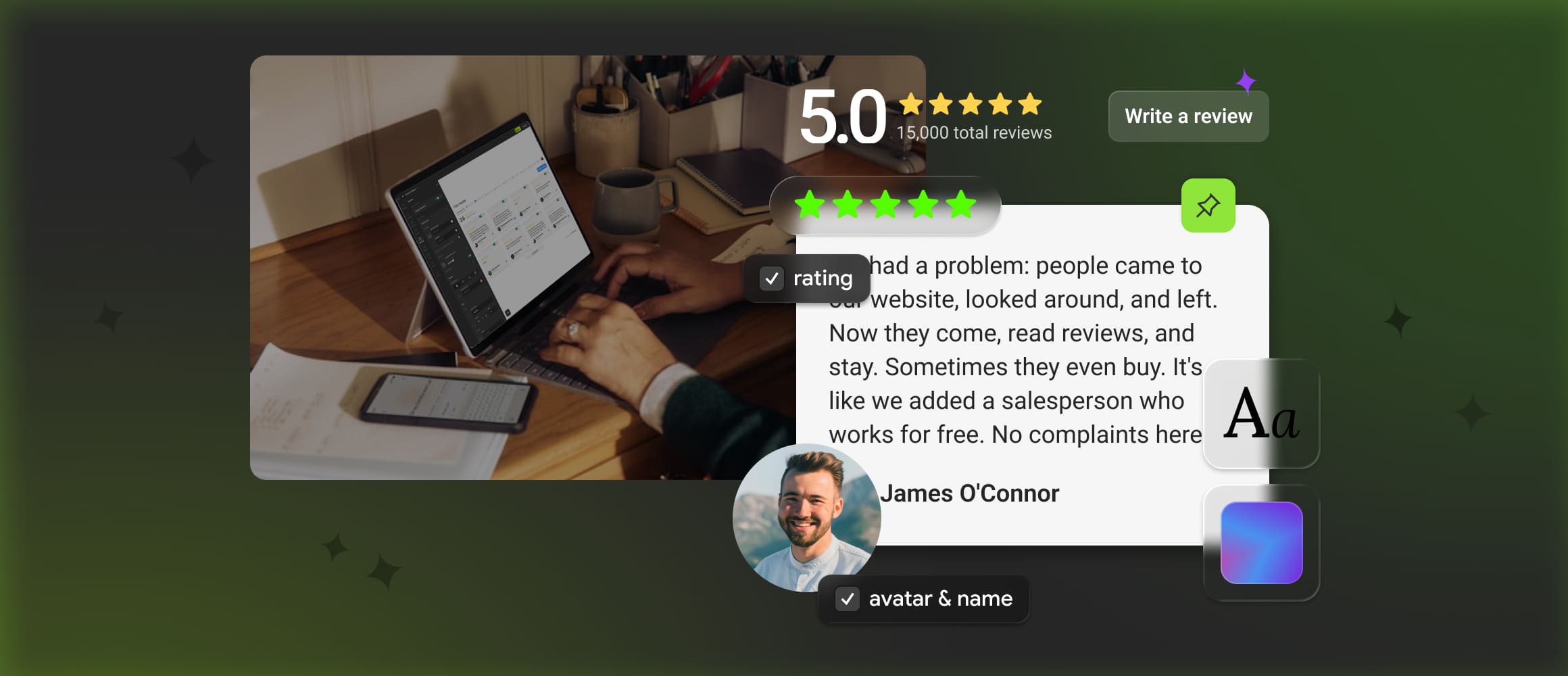
Mirror App's Reviews Widget can display approved testimonials added manually alongside connected review sources. That makes it possible to use a customer quote received by email while keeping its origin clear. Agree the wording and attribution first, then choose where it answers a real visitor question.
Four testimonial examples and what makes each useful
The examples below show how the useful detail changes with the customer's decision. They are writing illustrations, not customer endorsements.[1]
For a local repair company, imagine this comment: “Before anyone started, the engineer showed us which part had failed, explained the repair and confirmed the price. We could decide whether to go ahead without guessing what the final bill would be.” The useful point is the customer's understanding of the work. It belongs near an explanation of estimates or appointments, where a prospective customer may have the same uncertainty. It does not establish that every repair will cost the same or finish on the same day.
For a software business, a more informative testimonial might be: “Our office manager used to collect updates from three separate spreadsheets. After the team agreed on one process, she could prepare the weekly summary from a single view.” This describes a task and an operational change. Before publishing a real version, the business would need to establish what part the software played and what depended on the customer's own process changes. Removing the reference to the team's agreement would make the product appear to have done more than the customer said.
A hospitality example could focus on the experience before arrival: “We were booking for relatives who had not visited the area before. The team explained the parking options and sent clear directions, which made organising the trip much easier.” That account may be useful on a location or group-booking page. It is more relevant there than a broad statement about a wonderful stay, because the reader is trying to plan a journey. The business should still provide its own current directions and parking information.
A professional-services testimonial could describe how a decision became clearer: “We arrived with several ideas for the project. The first workshop helped us agree on the audience and decide which requests could wait.” The quote offers evidence about the working relationship and the way priorities were discussed. It would not justify a headline claiming that the supplier always reduces project costs, unless a separate, supportable account established that result.
These examples also show why a collection benefits from variety. Four people saying that a team was professional add less information than four people describing different parts of the experience. Look for differences in the questions answered, rather than changing the adjectives around the same claim.
Turn a long reply into a faithful excerpt
Suppose a real customer sends several paragraphs about an office refurbishment. They praise the finish, explain that deliveries had to work around opening hours and mention that one material choice changed after a site visit. An editor may want to extract the sentence about deliveries for the service page.
Keep the original message beside the draft. If the proposed quote says, “They organised deliveries around our opening hours,” check whether the surrounding sentences limit that observation to a particular phase or describe extra arrangements the customer paid for. A shorter excerpt should not erase conditions that change its meaning.
Send the final version back with the proposed attribution and a clear description of where it will appear. If the customer wants to remove a commercially sensitive detail, ask whether the remaining wording still gives a fair account. Sometimes the right decision is to use a different part of the story instead of pushing an edited sentence beyond what it can explain.
When several excerpts from the same customer appear across a website, review them together. Each may be accurate in isolation while their combined presentation implies a broader endorsement than the customer intended. One detailed story, introduced honestly and used in relevant places, can be more useful than a dozen fragments that appear to come from different experiences.
Note 1: The unattributed repair, software, hospitality and professional-services quotations are fictional examples. They must not be published as statements from real customers.