A customer quote can appear in an advertisement, a landing page, a proposal and a follow-up email. Repeating it everywhere is easy. Making it useful in each setting requires a little more thought about what the reader knows and what they need next.
Testimonial marketing is the planned use of genuine customer experiences to support that journey. The same story can contribute at several stages, but each excerpt should retain its meaning and have a clear purpose.
Introduce an experience a new visitor can recognise
At the first introduction, show a recognisable situation. Someone new to the business may need to understand who the service helps before they care about a result. A short account of why a customer sought help can make that situation concrete.
During evaluation, show the work behind the result. A reader comparing options may need a fuller story about implementation, preparation or support. Give them a route to that detail instead of stretching one introductory quote.
Before an enquiry, answer the remaining practical concern. A relevant excerpt can support an explanation of the next step, but the business still needs to state what happens after contact. Reusing the same praise at every stage does not answer three different questions.
Mailchimp's guide to client testimonials describes several ways customer experiences can be presented. Choose a format according to the information needed, rather than using a video or quote graphic simply because it is available.
For an introductory page, the relevant detail might be why a customer sought help. Keep the result proportionate and avoid presenting one person's experience as the normal outcome for everyone.
Add detail when the reader is comparing options
During evaluation, readers may want to understand the process, support, constraints or suitability for their situation. This is where an approved excerpt can lead into a fuller customer story.
Use different experiences to answer different concerns. A testimonial about friendly service does not establish how complex implementation works. Find a customer who can accurately describe that process instead of stretching an unrelated quote.
Mailchimp's discussion of digital touchpoints is useful for thinking about where people encounter a business. Map those encounters to real questions, then decide where a customer account contributes information the surrounding copy lacks.
Preserve meaning when you reuse a story
A long interview may contain several good excerpts, but each one must stand accurately on its own. Keep the qualification that explains a result. Do not move an old quote beside a new product in a way that implies the customer used it.
Confirm the approved channels and attribution before reuse. A customer who agreed to a website story has not necessarily approved paid advertising or a different company endorsement. Keep translations faithful and approve substantive edits where required.
Mailchimp's omnichannel engagement guidance emphasises continuity between customer encounters. In testimonial marketing, continuity also means that the story remains recognisable and accurate as its presentation changes.
Plan maintenance as well as placement
Keep an inventory of the stories and quotes in use, including their topic, approval and review date. This makes it easier to find a relevant experience without asking the same customers for new material every month.
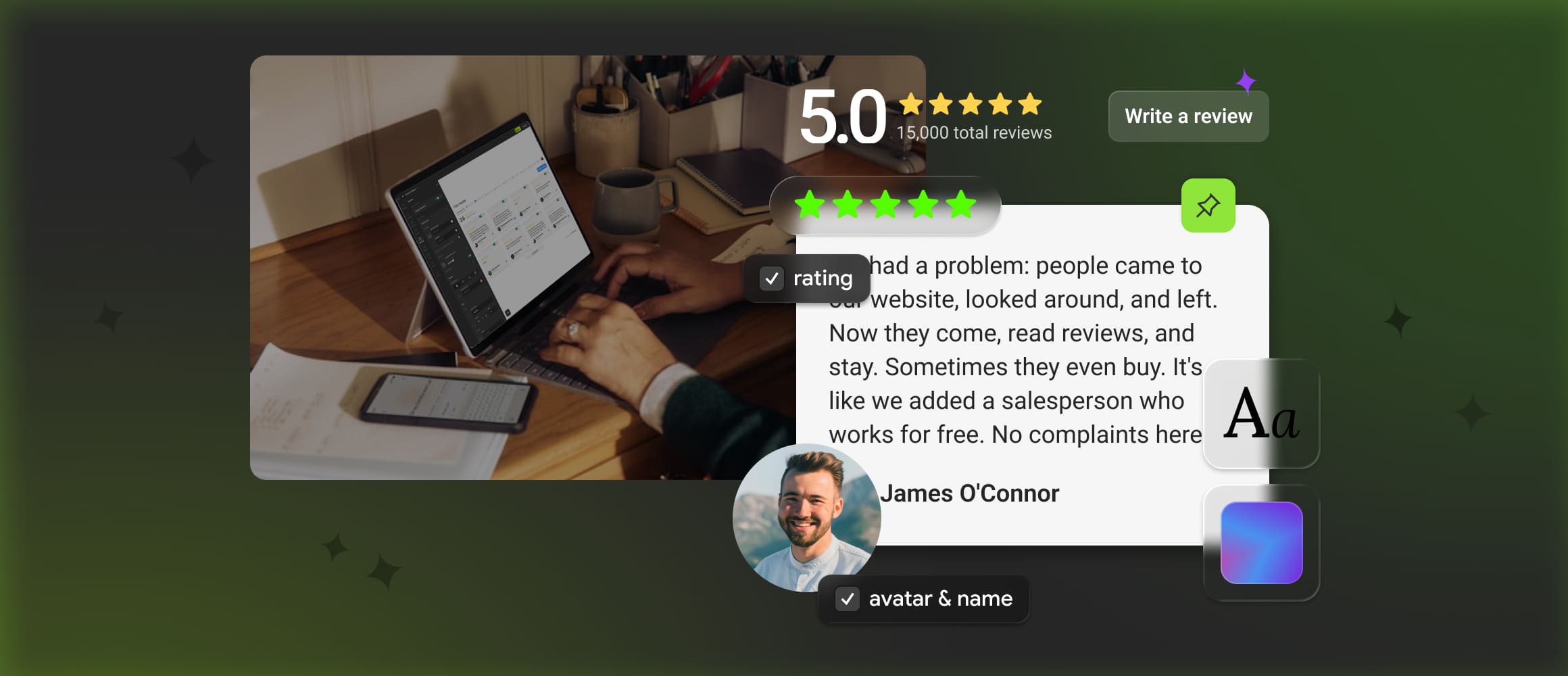
Mirror App's Reviews Widget can display approved testimonials on relevant website pages. Use the surrounding page to explain the offer and let the customer evidence add a specific perspective. The widget does not manage permissions or make every channel part of one automated campaign.
Evaluate the journey through meaningful outcomes, while distinguishing observation from cause. A visitor may read several pages and speak to colleagues before enquiring. An interaction with a quote is useful information, but it does not prove that the quote alone produced the sale.