A client has finished a project with you, the handover went well, and you would like to feature their experience. The email should make that request easy to understand. It should also leave the client free to decline without feeling that they owe your business a recommendation.
A useful testimonial request email explains why you are asking, offers a small prompt and describes the next step. You are requesting a quote for your own marketing, so be clear about that purpose rather than presenting the message as a private satisfaction survey.
Ask when the client has an experience to describe
Choose a moment when the client can reflect on the work. That may be after a completed service or after enough time using a product to form an opinion. Sending a request immediately after payment can be premature when delivery or onboarding has not happened yet.
Mailchimp's advice on review request emails highlights the value of making requests straightforward. Apply that principle to testimonials while explaining that the eventual quote would appear in your own materials.
Keep the request connected to the actual relationship. A client who has worked with one specialist should not receive an email that sounds as though the business has forgotten the project entirely.
Give the customer a manageable prompt
Here is an original example you can adapt: “Hi Alex, now that the new booking process has been running for a few weeks, would you be comfortable sharing a short account of your experience? One or two sentences about what changed for your team would be helpful. If we would like to publish an excerpt, we will send you the exact wording and attribution for approval first.”
That message identifies the experience, suggests a scale and separates the initial reply from publication approval. Replace the situation with something true for the recipient; do not reuse the example as though Alex were a real customer.
HubSpot's customer service email examples show how different customer situations call for different messages. A testimonial request should likewise reflect whether the relationship involved a short appointment, a long project or ongoing support.
Make publication a separate decision
If the customer replies with a useful story, send back the proposed excerpt. Ask whether they approve the wording, name, role and channels. A public website, a sales presentation and a paid advertisement are different contexts, so avoid an unexplained request to use the quote “everywhere.”
The ASA's guidance on testimonials and endorsements is a useful UK reference for permission and evidence. Requirements vary by market and use, but a clear record of what was agreed is a practical starting point.
If the client does not reply, one considerate reminder may be appropriate. State that there is no obligation and then leave it there. Repeated requests can damage the relationship the testimonial was meant to describe.
Keep the approved version easy to find
Treat approval as a short handover someone else can follow:
- Save the customer's original reply before drafting an excerpt.
- Send back the exact quote, attribution and proposed uses for approval.
- Keep the final approved version with that response, including any limits.
- Give the publishing colleague that version, rather than asking them to choose wording from the email thread.
If the client changes a job title or asks for a correction later, update the record as well as the live page. Otherwise, an older version can return the next time someone reuses the quote.
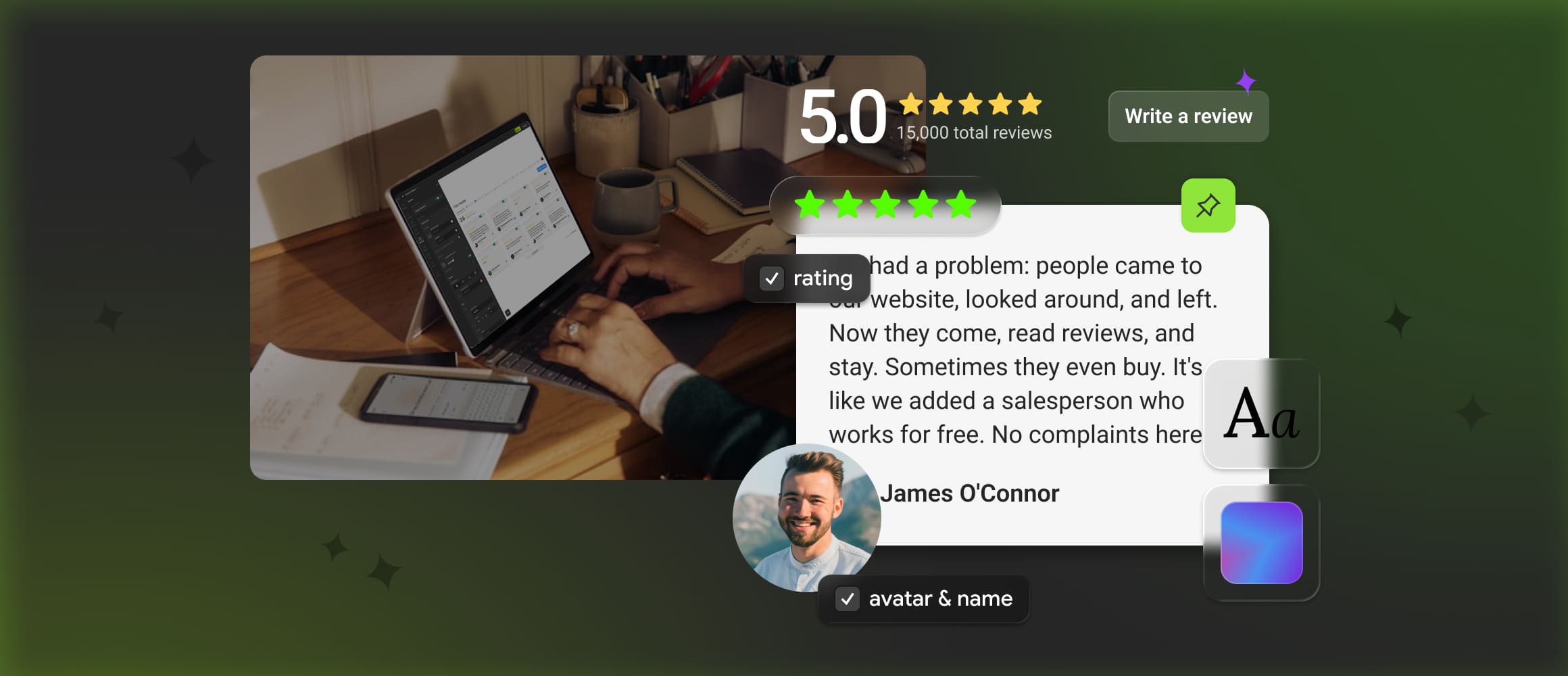
Mirror App's Reviews Widget allows manually added testimonials, which can be useful for quotes collected by email. Add the approved version and accurate attribution. Mirror App provides a way to display the quote; the request and permission process remain your team's responsibility.
Adapt the request to the relationship
A short project and an ongoing service need different prompts. These two fictional emails illustrate the difference. Replace the details with the recipient's actual experience before sending anything.
For a completed project: “Hi Maya, thank you for working with us on the new product photography. Now that you have used the images on the launch pages, would you be comfortable sharing a few sentences about the experience? We would especially like to understand whether the planning and handover gave your team what it needed. There is no obligation to provide a testimonial. If we propose using part of your reply on our website, we will send the exact excerpt and attribution for approval first.”
For an ongoing service: “Hi Daniel, we have been working together on the monthly reporting process since the spring. If you have had enough experience to form a view, would you be happy to describe what is useful and what still takes effort? A brief reply is plenty. We are collecting possible customer stories for our website, and we will ask you to approve any wording we would like to publish.”
The second request makes room for an incomplete experience. That matters when the relationship is still developing and the customer cannot honestly describe a finished outcome. Avoid asking someone to endorse the whole service when they have used only one part of it.
Give the reply a named owner
Choose who will read the response before the email goes out. If a client raises an unresolved issue, answer that issue through the normal service process rather than immediately extracting the positive sentence for marketing. A testimonial request can uncover a concern your team has not heard before.
The person handling approval should also know when to involve the client's company. A contact may be comfortable describing their own experience but unable to authorise the company logo or a public statement about internal results. Ask who needs to review those details, and give them the proposed wording rather than making them reconstruct it from an email thread.
A useful permission record is understandable to someone who was not part of the conversation. Keep the approved excerpt, attribution, intended channels and relevant limits together. If the customer approved a website quote but the sales team later wants it in an advertisement, check that new use instead of treating the original reply as unlimited permission.